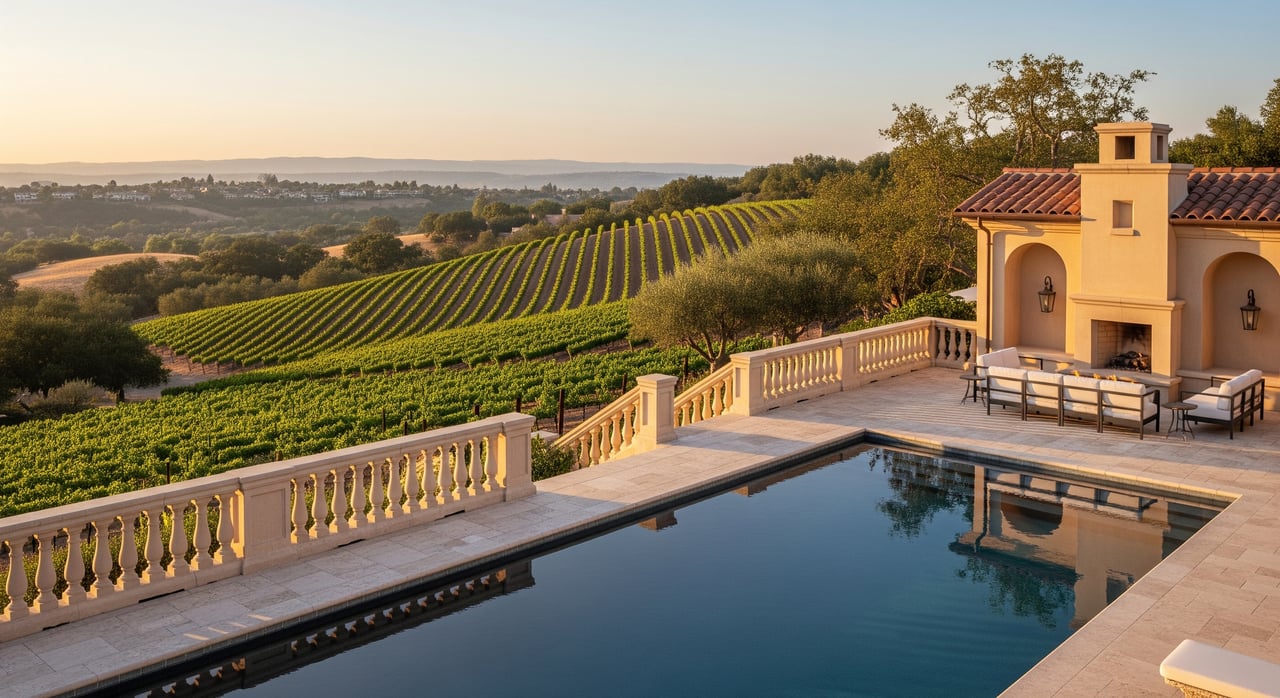
If you picture mornings with vineyard views and evenings on a patio under big skies, Temecula’s wine country might be calling. Maybe you also want quick access to Old Town, schools, and shopping without a long drive. You have real options here, from low-maintenance suburban tracts to view homes and true estate properties on acreage. This guide breaks down each choice so you can weigh lifestyle, costs, utilities, and due diligence with confidence. Let’s dive in.
Temecula wine country at a glance
Temecula Valley is a recognized American Viticultural Area, and the local lifestyle centers on wineries, scenic hills, and outdoor entertaining. You will find tasting rooms, event venues, and equestrian-friendly corridors that shape daily life. The Mediterranean climate delivers hot, dry summers and mild winters, which is great for grapes but calls for smart fire preparedness.
Location is a major plus. Temecula sits along the I-15 corridor with access to Riverside, San Diego, and inland job centers. Amenities like Old Town, shopping, and services cluster near the city core, while many wine-country properties sit 5 to 25 minutes out depending on the road and terrain.
Community services reflect a mid-sized, growing city. Schools are primarily served by Temecula Valley Unified School District. Urban and suburban areas typically connect to regional water and sewer providers, while more rural parcels often rely on private wells and septic systems.
Home types: tracts to estates
Suburban tracts near town
Suburban neighborhoods close to the city center are Temecula’s most accessible path to wine-country living. Lots generally range from about 4,000 to 9,000 square feet, with single-family homes and pockets of townhomes. Floor plans often deliver 3 to 4 or more bedrooms and roughly 1,700 to 3,200 or more square feet.
- What you’ll like: Convenient access to schools, Old Town, and retail. Community amenities like parks, pools, and trails. Lower yard maintenance and easier financing.
- What to consider: Many areas include HOAs and sometimes Mello-Roos in newer developments. You may have fewer vineyard views, less privacy, and rules on exterior changes.
Vineyard-adjacent and view homes
If you want a stronger wine-country feel without full estate maintenance, consider homes on half-acre to 2-acre lots, sometimes larger. These sit on hillsides or ridgelines with valley or vineyard views and larger outdoor spaces made for entertaining.
- What you’ll like: Scenic outlooks, usable land for a hobby vineyard or garden, and potential space for small outbuildings. A more private, rural vibe while staying within reach of town.
- What to consider: Zoning may allow residential-agricultural uses, but a commercial tasting room typically requires county permits. Some properties use wells and septic, and internet or cellular coverage can vary in hillier areas.
Estate homes and large ranch properties
For maximum privacy, views, and land, look to multi-acre estates. Parcels commonly run from 2 acres to 20 or more, with luxury homes, guest houses or ADUs, pools, extensive outdoor living, and sometimes equestrian facilities. Some estates include established vineyards or room to plant.
- What you’ll like: Seclusion, panoramic scenery, and the option to manage or lease vineyard blocks. Space for long driveways, mature landscaping, and resort-style amenities.
- What to consider: Higher acquisition and maintenance costs. Water management, wildfire readiness, and infrastructure are real planning items. Financing and insurance can be more complex, especially for agricultural or non-standard properties.
Costs, pricing, and what drives value
Temecula’s price spectrum follows a clear pattern. Suburban tracts are generally the most affordable entry point. Vineyard-adjacent and view homes typically command a premium for land and outlooks. True estates and working vineyard properties sit at the top of the market.
Exact prices shift with the market, so use current comps when you get serious. What reliably drives value includes:
- Lot size and privacy, especially view corridors and usable acreage.
- Access to municipal water and sewer versus well and septic.
- HOA dues and any Mello-Roos or special tax districts in planned communities.
- Insurance costs, including wildfire-related coverage and mitigation needs.
- Ongoing maintenance for vineyards, landscaping, pools, and private roads.
- Permit and infrastructure costs if you plan commercial wine or event operations.
Lifestyle trade-offs to weigh
- Convenience vs. space: Tracts near town minimize driving and yard work. Acreage offers breathing room and views but adds upkeep.
- Privacy vs. rules: Estates provide seclusion and flexibility. HOAs in master-planned areas bring amenities and standards but also restrictions.
- Utilities vs. independence: Municipal water and sewer simplify life. Wells and septic can work well with proper maintenance but add testing and long-term planning.
- Commute vs. serenity: Properties 5 to 25 minutes from the core feel peaceful and scenic. Factor in drive times and road types.
Due diligence checklist for buyers
Zoning and permitted uses
- Confirm zoning classification and allowed uses. Residential-agricultural parcels differ from commercial agricultural. A tasting room or winery typically requires a Conditional Use Permit and compliance with county rules.
- If equestrian use or event hosting matters to you, verify those permissions before you offer.
Water, wells, septic, and wastewater
- Identify if the property connects to municipal water and sewer or relies on well and septic.
- For wells, obtain a recent pump test and water-quality report, and review historical capacity.
- For septic, request a certification, system layout, and capacity. Confirm any expansion plans align with system limits.
Environmental and safety
- Review wildfire hazard maps for risk level. Ask about defensible space, fire-resistant features, and multiple egress routes.
- On hillside lots, consider drainage, slope stability, and any history of erosion or slides.
- If near active agriculture, ask about pesticide drift management and buffers.
Title, easements, and access
- Investigate recorded easements for shared driveways, utility lines, or agricultural access.
- Confirm legal access to the property and any private road maintenance agreements.
Inspections and specialized reports
- Standard home inspection, roof evaluation, and pest clearance.
- Septic system inspection and well testing when applicable.
- Irrigation lines, pumps, and vineyard infrastructure if vines are present.
- For ADUs or guest houses, verify permits and legal status.
Financing and insurance
- Lenders can apply different guidelines for acreage, agricultural classifications, or non-conforming outbuildings. Some loans limit allowed acreage or auxiliary structures.
- You may need a jumbo or portfolio loan for estates. Shop wildfire insurance early and budget for retrofits like ember-resistant vents or Class A roofing if needed.
Who Temecula wine-country living fits
- Young families: Often choose suburban tracts for easy commutes to schools, community amenities, and lower maintenance.
- Lifestyle buyers and weekenders: Love vineyard views, outdoor living, and quick access to tasting rooms and events.
- Equestrian owners: Look for acreage with space to add or maintain barns and arenas.
- Investors and second-home buyers: Evaluate rental or second-home potential, subject to local rules for short-term rentals.
- Ag-curious and winery operators: Seek parcels with vineyard blocks or room to plant, while planning for permitting and infrastructure.
How to choose your best fit
Clarify lifestyle priorities. Rank what matters most: commute, schools, privacy, views, outdoor space, or amenities.
Align budget and financing early. Pre-approval is key, especially if you may need a jumbo or portfolio loan for acreage.
Map your daily routine. Test-drive commute routes and timing. Check the distance to shopping, schools, and medical services.
Verify utilities and internet options. Confirm water, sewer or well and septic, and ask providers about internet speeds in hillside areas.
Walk the land at different times. Morning and sunset lighting reveal view corridors, wind patterns, and neighborhood activity.
Plan for maintenance. Estimate costs for landscaping, private road upkeep, vineyard care, and insurance.
Partner with a local pro. A knowledgeable agent can flag zoning issues, coordinate specialized inspections, and guide negotiations.
Selling a wine-country home
If you are preparing to sell, gather documents that buyers expect in this niche. Recent well and septic records, permits for agricultural structures or ADUs, and any fire-mitigation improvements help build trust. Disclose known hazards or past claims and showcase what makes the property special.
Professional marketing is essential. High-quality photography, video, and virtual tours help buyers feel the views and flow of the land. Highlight privacy buffers, outdoor living spaces, vineyard features, and proximity to tasting rooms to capture lifestyle-focused demand.
Work with a local guide
Wine-country decisions are both emotional and practical. You deserve an advisor who understands Temecula’s neighborhoods, utilities, and land-use details and who can market your property with care. Our team pairs a hands-on, family-like service approach with professional photography, video, and technology tools to streamline your move and protect your bottom line.
Ready to tour homes or prep your sale? Connect with Janet Cisneros for a friendly strategy call. Bilingual support is available, and if you are selling, you can also request an instant valuation to get started.
FAQs
What does “Temecula wine country living” mean for daily life?
- It usually means scenic surroundings near wineries, rolling hills, and outdoor spaces designed for entertaining, with a peaceful feel a short drive from the city core.
How far are wine-country homes from Old Town and shopping?
- Many vineyard-adjacent and estate properties sit about 5 to 25 minutes from central amenities, depending on the specific location and road access.
Are most estate properties on wells and septic systems?
- Many rural and estate homes rely on private wells and septic systems, while suburban tracts are more commonly on municipal water and sewer.
Can I open a tasting room at any vineyard-adjacent home?
- Not without approvals. Commercial wine operations and tasting rooms typically require specific zoning and county permits, along with compliance on parking, noise, and wastewater.
How do HOAs and Mello-Roos affect costs?
- In master-planned neighborhoods, HOAs add monthly dues and some newer communities include Mello-Roos or special taxes. Estates and older rural parcels often have no HOA or Mello-Roos.
What should I budget for beyond the purchase price?
- Plan for insurance, utilities or well and septic maintenance, landscaping, road upkeep, possible vineyard care, and any HOA or special taxes if applicable.